The average cost of a complete DRX9000 spinal decompression program is typically between $3,000 and $4,500, depending on the severity of your condition and the number of treatments needed. Individual sessions average about $150 nationwide.
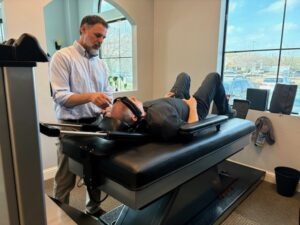
The cheapest program isn’t always the least expensive in the long run. Some clinics use basic traction tables, while others use FDA-cleared computerized decompression systems like the DRX9000. They are not equivalent treatments.
If you’ve searched online, you’ve probably noticed that spinal decompression prices vary dramatically. Some clinics advertise treatments for less than $100, while comprehensive programs may cost several thousand dollars.
The difference usually isn’t just the price per visit. It often reflects the technology being used, the provider’s experience, whether imaging and examinations are included, the number of recommended treatments, and whether you’re receiving true computerized spinal decompression or a basic traction table.
When comparing costs, it’s important to compare the entire treatment program—not just the advertised price of a single visit.
While that may seem like a significant investment, it’s often far less expensive than repeated injections, surgery, months of physical therapy, or living with chronic pain. Here’s exactly what determines the cost—and whether it’s worth it.
If you’re considering spinal decompression, cost is probably one of your biggest questions. The answer depends on your condition, how many treatments you need, and whether you’re receiving true computerized spinal decompression such as the DRX9000. Here’s what patients should know before making a decision.
Non-surgical spinal decompression with the DRX9000 is one of the most advanced, conservative ways to treat herniated discs, sciatica, and chronic back or neck pain.
Why the investment? Spinal decompression systems like the DRX9000 aren’t “me-too” traction tables—they are highly advanced medical devices. The DRX9000 continuously adjusts tension 13 times per second while following a patented logarithmic pull curve, creating negative pressure inside the disc space. This precision can allow discs to rehydrate and herniations to retract safely, without triggering the painful muscle guarding that cheaper tables can cause.
Many patients “wait and see” with back pain, hoping it will get better. Unfortunately, untreated disc problems can worsen over time.
Lost Productivity: Back pain is one of the leading causes of missed workdays. Even one missed week can cost more than several decompression sessions.
Medication Costs: Long-term use of pain relievers adds up—both financially and in terms of side effects.
Progression of Damage: A small disc bulge today can become a full herniation tomorrow, often leading to more invasive (and expensive) treatments.
Doing nothing usually isn’t free—it just delays and multiplies the costs.
If you’re dealing with symptoms from a herniated or bulging disc, see our detailed guide to non-surgical spinal decompression in Plano to learn about non-surgical options.
Epidural steroid injections (ESIs) are often recommended for disc-related pain. While they can reduce inflammation temporarily, they don’t address the underlying disc problem.
Cost: Each injection typically costs $1,000–$2,500 (sometimes more with facility fees).
Frequency: Relief usually lasts only 3–6 months, meaning repeat injections are often necessary.
Hidden Risk: Research shows steroids can inhibit or even switch off chondrocytes—the cartilage-producing cells inside joints. In some cases, they may accelerate joint degeneration rather than preserving it.
Bottom Line: Over time, multiple injections can surpass the cost of a full decompression program—without fixing the root cause and with potential harm to long-term joint health.
Physical therapy (PT) plays an important role in strengthening muscles, improving mobility, and supporting long-term recovery. But when it comes to herniated discs or degenerative disc disease, PT has some limitations:
Doesn’t Reduce Disc Pressure: PT builds strength around the spine but cannot create negative pressure inside the disc to retract herniations.
Symptom Management vs. Cause Correction: Patients often feel stronger and more flexible, but the actual disc problem may remain unchanged.
Risk of Flare-ups: Aggressive exercises or incorrect technique can sometimes aggravate nerve pain or make the condition worse.
Cost Over Time: PT sessions may cost $50–$150 each. Multiple rounds over months or years can add up without ever directly addressing the disc itself.
Many patients find that combining decompression + targeted PT gives the best results: decompression fixes the disc problem, while PT builds the stability to keep it from coming back.
When conservative care fails, many patients are told their only option is spinal surgery.
Cost: Even with insurance, spinal surgeries often cost $20,000–$100,000+ (including hospital and surgeon fees).
Risks & Recovery: Risks include infection, scar tissue, failed back surgery syndrome, and long recovery times (months vs. weeks).
Success Rates: Not every patient gets lasting relief, and many still need pain management afterward.
Compared to these risks and expenses, spinal decompression offers a safe, non-invasive path forward—often with lasting results.
It’s essential to compare how much does spinal decompression cost against other treatment options.
| Treatment | Average Cost | Duration of Relief | Addresses Root Cause? | Risks/Downsides |
|---|---|---|---|---|
| Spinal Decompression | $3,000–$4500 total (~$150/session) | Long-term; discs can heal | ✅ Yes | Minimal (mild soreness) |
| Physical Therapy | $50–$150/session; $1,000+ per round | Weeks–months | ❌ No (strengthens around disc) | Flare-ups possible |
| Epidural Injections | $1,000–$2,500 each | 3–6 months | ❌ No | Cartilage damage risk, repeat costs |
| Surgery | $20,000–$100,000+ | Variable | ✅ Sometimes | Major risks, long recovery |
| Doing Nothing | “Free” upfront | Condition worsens | ❌ No | Lost work, higher future costs |
Patients often think delaying treatment saves money. Unfortunately, chronic disc problems frequently become more expensive over time through additional MRIs, repeated physician visits, medications, injections, lost work time, and sometimes surgery. While not every patient needs treatment immediately, postponing care isn’t always the least expensive option.
How much does spinal decompression cost per session?
On average, spinal decompression costs about $150 per session nationwide.
Is spinal decompression covered by insurance?
Most insurance plans do not cover decompression, but some will cover the evaluation, exams, or complementary therapies. Ask your provider.
How many sessions do I need?
Most patients require 20–30 sessions over 6–10 weeks for full results. Often times, we can start with a single trial session to make sure you are comfortable with the experience and then do blocks of 10 treatments.
What is the success rate of spinal decompression?
Studies show 70–90% of qualified patients experience significant relief and functional improvement with DRX9000 decompression. Individual results vary.
Can I combine decompression with physical therapy, massage, chiropractic or home exercises?
Yes—this is often the best approach. Decompression addresses the disc itself, while PT and home exercise strengthens surrounding muscles to prevent recurrence.
Is spinal decompression worth the cost?
For many patients, avoiding surgery, reducing pain medication, returning to work sooner, and improving quality of life make spinal decompression a worthwhile investment. The best way to know whether it’s likely to help you is through a comprehensive evaluation.
One recent patient came to our office after spending nearly $4,000 on injections, physical therapy, medications, and repeated MRI scans over two years. After completing a DRX9000 program, he was able to return to golf and avoid the surgery he had been considering. While every case is different, it’s a good example of why looking only at the upfront cost can be misleading.
This article was written and medically reviewed by Dr. David Kaff, DC, founder of Frisco Spinal Rehab. Dr. Kaff has over 20 years of experience treating disc-related spinal conditions using advanced technologies like the DRX9000 True Spinal Decompression system. Find out more: https://friscorehab.com/spinal-decompression/
Still wondering whether spinal decompression is right for you?
The best way to find out is with a consultation and trial DRX9000 session. We’ll review your symptoms, any MRI findings, determine whether you’re a good candidate, and explain all treatment options before you make a decision.
If you’d like to learn more about spinal decompression and disc-related conditions, these articles may also be helpful:
This article is for informational purposes only and is not a substitute for professional medical advice. Always consult a qualified healthcare provider for diagnosis and treatment options.