If you’re dealing with a herniated disc that just won’t heal, you’re not alone.
Most patients who come into our office have already tried:
…and still feel stuck in the same cycle.
Temporary relief → pain returns → try something else → repeat
At some point, it stops feeling like recovery—and starts feeling like you’re just managing it.
Here’s the reality:
Most herniated discs don’t fail to heal because your body can’t heal
They fail because the underlying mechanical problem isn’t being corrected
Most treatments focus on:
That can help symptoms…
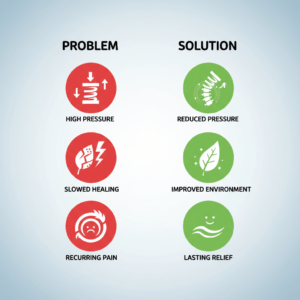
But a herniated disc is primarily a pressure problem.
If the disc is still compressed:
That’s why relief is often short-lived
Spinal discs don’t have a direct blood supply—a point also noted by organizations like the Mayo Clinic—which means they rely on movement and pressure changes to absorb nutrients.
They depend on:
to absorb nutrients and fluid.
When a disc stays compressed:
This is one of the most overlooked reasons recovery stalls
Many treatments are helpful—but limited:
All valuable.
But none consistently address:
Mechanical load inside the disc itself
Without that change, the underlying issue often remains.
Not all herniated discs are the same.
They can range from:
As the condition progresses:
This is where more targeted care becomes important
This is the turning point for many patients.
To support disc recovery, treatment needs to:
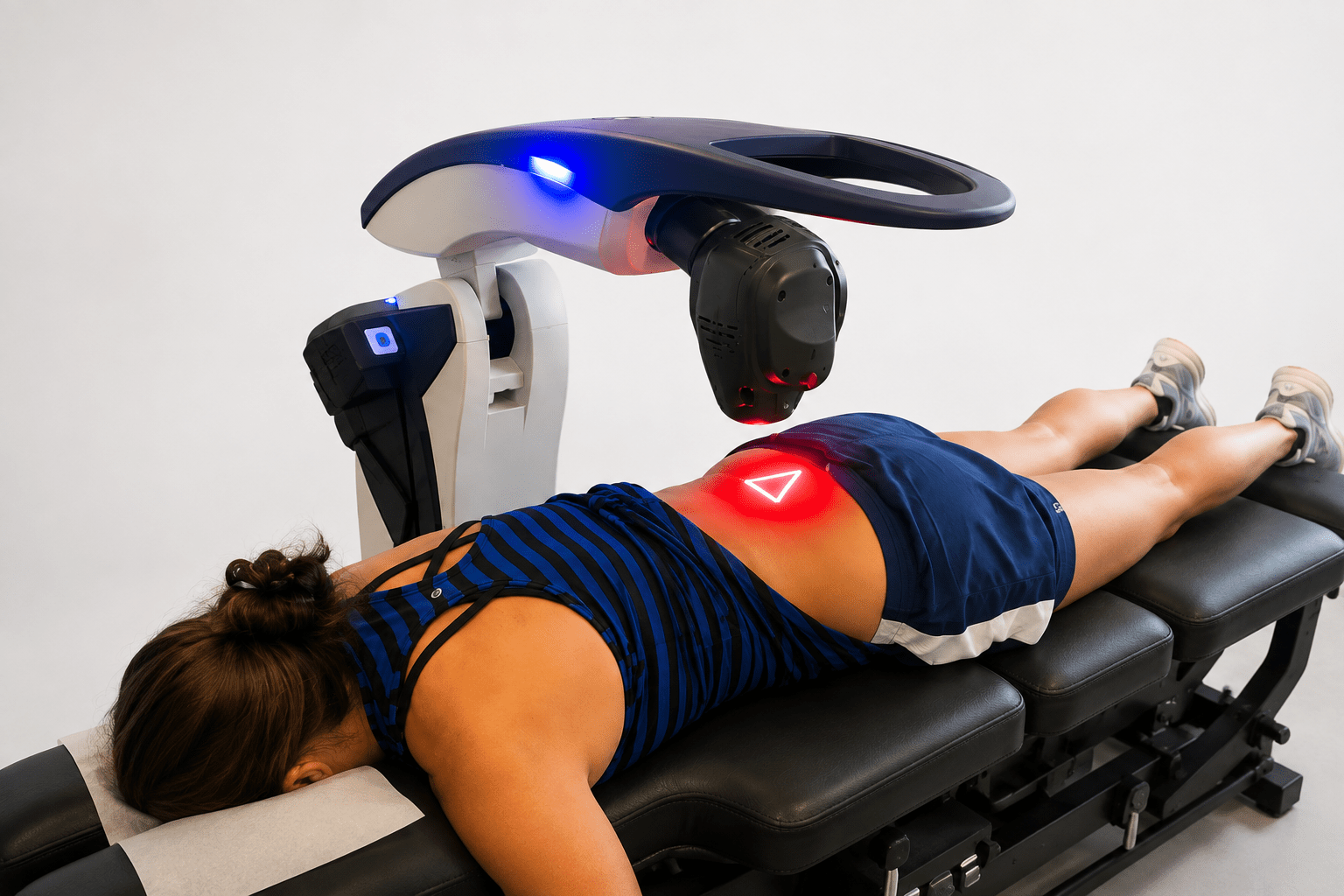
That’s where targeted spinal decompression comes in.
Non-surgical spinal decompression—such as the DRX9000 system—is designed to:
This is very different from basic traction or generalized stretching.
The goal is not just temporary relief—but improving the environment the disc needs to recover
The Pattern We See Over and Over
Most patients come in after months—or years—of this:
Eventually, you start wondering if it will ever actually heal.
You may be a candidate if:
Not every patient is a candidate, which is why proper evaluation matters.
In some cases, yes—especially with mild disc injuries.
However, many patients continue to have symptoms because the disc remains compressed and irritated. When pressure isn’t reduced, healing can stall or symptoms may keep coming back.
This is very common.
Many treatments reduce inflammation or muscle tension temporarily—but don’t address the underlying disc pressure. As a result, symptoms improve for a short time, then return once the irritation builds again.
Mild cases may improve within a few weeks.
More persistent or advanced disc issues can take significantly longer—especially if the mechanical stress on the disc hasn’t been addressed. Chronic symptoms often indicate that additional or different treatment may be needed.
Short-term relief often comes from reducing inflammation (medication, rest, injections).
Longer-term improvement typically depends on addressing the underlying cause—such as reducing pressure on the affected disc and nerve.
Spinal decompression is designed to reduce pressure within the disc and improve the environment for recovery.
Many patients report improvement, especially when other treatments haven’t provided lasting relief. However, results can vary, and proper evaluation is important to determine if it’s appropriate.
No.
Basic traction applies a general stretch, while advanced decompression systems are designed to apply controlled, targeted forces with specific angles and timing.
This allows for a more precise approach to reducing disc pressure.
Surgery may be recommended in cases involving:
For many patients without these red flags, non-surgical options are often explored first.
You may be a candidate if:
A proper evaluation is necessary to determine if this approach is appropriate for your specific condition.
In many cases, it’s because the underlying pressure inside the disc hasn’t changed. Even if symptoms temporarily improve, continued compression can prevent full recovery.
Many patients are able to manage or improve symptoms without surgery, depending on the severity of the condition. Non-surgical approaches aim to reduce irritation, improve function, and support the body’s natural healing process.
If your herniated disc isn’t healing, it doesn’t mean you’re out of options.
It usually means:
The underlying cause hasn’t been fully addressed yet
If you’ve already been diagnosed and want to explore all available options:
For a full breakdown of treatment options visit our Herniated Disc Treatment in Frisco page.
What Most Patients Notice First
Many patients tell us:
That shift—from temporary relief to real progress—is what most people have been missing.
At Frisco Spinal Rehab, we focus on non-surgical solutions for disc-related pain—especially for patients who feel stuck after trying multiple treatments.
If you want clarity on:
What to Expect If This Approach Is Right for You
Get a Clear Answer About Your Disc (Not Guesswork). Call Today 972-712-7744. At Frisco Spinal Rehab, we’ve worked with thousands of disc-related cases—from mild flare-ups to patients who were told surgery was their only option.