If you’ve been told you have a herniated or bulging disc, you might be wondering: How did this happen? The truth is, herniated discs don’t usually come from one single cause. Instead, they develop from a mix of genetic factors you can’t control and lifestyle factors you can. Understanding these factors, including what causes a herniated disc, not only helps to demystify the condition but also empowers individuals to take proactive steps in managing their spinal health.
Understanding what causes a bulging or slipped disc is essential for anyone dealing with this issue.
Research on twins and families shows that up to 70% of disc problems are influenced by genetics. For instance, studies
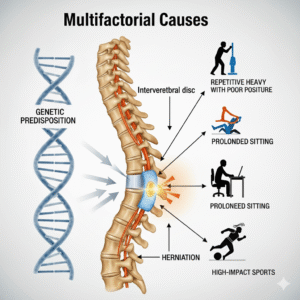 indicate that individuals with a family history of herniated discs are at a significantly higher risk of developing similar issues. This genetic predisposition can manifest in various ways, such as inherited weaknesses in the spinal structure or connective tissue.
Weaker disc structure: Some people inherit collagen and connective tissue that’s more prone to tearing. Genetic variations can affect how resilient these tissues are, which in turn influences how well the discs can withstand stress over time. This is particularly important for individuals engaged in high-impact activities, as their weaker discs may be at a higher risk of injury.
Inflammation: Certain genes cause higher baseline inflammation, which accelerates disc wear and tear. Inflammation pl
ays a critical role in the body’s response to injury, but chronic inflammation can lead to degeneration of the discs, making them more susceptible to herniation. Understanding the genetic factors that influence inflammation can help in developing targeted treatments and preventive measures.
Spine shape: The way your bones and joints are formed—like the angles of your facets (facet tropism)—can increase disc stress. Variations in spinal anatomy can create uneven distributions of pressure on the discs, leading to an increased risk of herniation. Awareness of these anatomical differences can guide individuals in choosing appropriate exercises and activities that minimize risk.
This explains why herniated and degenerative discs can happen even in healthy, athletic young adults with no history of trauma.
This explains why herniated discs can happen even in healthy, athletic young adults with no history of trauma. It serves as a reminder that while physical fitness is crucial, underlying genetic factors can still play a significant role in spinal health.
Additionally, exploring what causes a slipped disc can help in recognizing symptoms early.
Even if genetics load the gun, lifestyle often pulls the trigger. Here’s how lifestyle choices can significantly impact the likelihood of developing a herniated disc:
By investigating what causes a bulging disc, individuals can make informed choices about their health.
Repetitive lifting or twisting: Heavy loads or awkward movements put shear stress on the discs. This is particularly relevant in occupations that require frequent lifting or twisting, as they can exacerbate any existing weaknesses in the disc structure. It’s essential to employ proper lifting techniques and incorporate strength training to support the spine.
Understanding what causes a herniated disc can prevent further injuries.
Sitting for long hours: Office workers are at higher risk because sitting increases pressure inside the discs by up to 40% compared to standing. Add poor posture, and the risk multiplies. Ergonomic furniture, regular breaks, and stretching can help mitigate these risks for those who spend long hours seated.
Recognizing what causes a herniated disc can motivate lifestyle changes.
High-impact sports: Football, gymnastics, wrestling, and running can all increase repetitive microtrauma to discs. Athletes, especially those in contact sports, must be aware of the cumulative effects of these activities and consider cross-training and recovery strategies to protect their spine.
Discussions about what causes a herniated disc are important in rehabilitation settings.
Obesity: Extra body weight adds constant compression to the lumbar spine. This increased pressure can lead to faster degeneration of the discs, underscoring the importance of maintaining a healthy weight through diet and exercise.
Many patients ask what causes a herniated disc when they first experience symptoms.
Smoking: Nicotine reduces blood supply to the discs, limiting their ability to heal. Quitting smoking can be a critical step in improving overall spinal health and reducing the risk of herniated discs.
Understanding what causes a herniated disc can lead to better preventative measures.
Additionally, lifestyle changes such as engaging in regular physical activity, maintaining flexibility through stretching, and practicing good posture can significantly contribute to spinal health. A holistic approach that combines awareness of genetic predisposition with proactive lifestyle choices is essential for preventing disc issues.
Ultimately, knowing what causes a herniated disc helps in managing the condition effectively.
If you sit all day, play high-impact sports, or lift heavy for a living, you can reduce your risk with core strengthening, posture awareness, and smart movement strategies. Additionally, incorporating activities like yoga or Pilates can enhance core stability and flexibility, further protecting your spine.
The good news? Even if you’ve already developed a herniated disc, advanced non-surgical treatments like spinal decompression can help many patients avoid surgery and get lasting relief. It’s important to explore these options with a qualified healthcare professional to determine the best course of action for your specific situation.
For those suffering, understanding what causes a herniated disc is crucial for recovery.
The good news? Even if you’ve already developed a herniated disc, advanced non-surgical treatments like spinal decompression can help many patients avoid surgery and get lasting relief.
Asking what causes a herniated disc is a common question in medical consultations.
As a chiropractor, I often emphasize the importance of education and prevention when it comes to spinal health. Encouraging patients to be proactive rather than reactive in managing their spinal health can lead to better outcomes and improved quality of life.
Every individual should learn what causes a herniated disc for better health management.
“I’ve battled lumbar disc herniations myself. My genetics stacked the odds against me, and on top of that, I played college football on the offensive line, carried extra weight, and had facet tropism — all cofactors that made disc problems almost inevitable. Over the years I’ve personally tried several different spinal decompression tables. Without question, the DRX9000 was the game changer. It delivered the precision and relief that other devices couldn’t, and that experience is why I now dedicate my practice to helping patients find the same kind of breakthrough.”
Many patients benefit from knowing what causes a herniated disc during their treatment journey.
In conclusion, understanding the multifaceted nature of herniated discs can empower individuals to take charge of their spinal health. Genetics play a significant role, but lifestyle choices are equally important. By combining awareness of both factors, individuals can make informed decisions that promote long-term spinal health.
It’s essential to grasp what causes a herniated disc to understand your treatment options.
— Dr. David Kaff, Chiropractor in Frisco, TX | Frisco Spinal Rehab


