You did what you were told was the right thing.
You had the surgery.
You went through recovery.
You followed instructions.
And you’re still in pain.
If you are experiencing persistent back pain or sciatica after a discectomy, laminectomy, or spinal fusion, you are not alone.
This situation is often referred to as Failed Back Surgery Syndrome (FBSS) — a term used when pain continues or returns after spine surgery.
At Frisco Spinal Rehab, we work with patients who feel stuck between “just live with it” and “have another surgery.”
If you feel like you're out of options - you're not. We see patient every week in your exact situation. Many patients begin to wonder is back surgery my only option - especially after already going through one procedure. That's not always true.
Back surgery changes the mechanics of your spine and doesn't fix disc pressure long-term. Fusion creates new stress levels and scar tissue can form around the nerve roots (perineural fibrosis).
Even when a surgical procedure is technically successful, pain may persist due to:
Sometimes the original pain generator was only part of the problem.
Sometimes new stress patterns develop after surgery.
Not all persistent pain means the surgery “failed.”
But it does mean your spine may still need support.
If you are experiencing progressive weakness, bowel or bladder changes, seek urgent medical care.
Many of the patients who come to us after back surgery share a similar story.
They may have had a discectomy or fusion and initially felt some relief—but over time, the pain returned or never fully went away. Some develop new symptoms, like pain traveling down the leg again or discomfort above or below the surgical area.
Often, they’ve already tried:
And are now being told that another surgery may be the next step.
👉 These are the exact situations where a careful, non-surgical approach may still offer another path forward.
In many post-surgical cases, DRX9000 spinal decompression becomes the missing step - addressing pressure and nerve irritation that surgery alone does not fully resolve.
The goal is controlled, targeted unloading of the affected segment, which can help reduce nerve irritation while also relieving excess stress on the segments above and below the surgical area. This is especially important because surgery does not restore normal disc pressure mechanics, and unresolved pressure can continue to drive pain even after a procedure.
👉 This is a key reason symptoms may persist—and where decompression can play a meaningful role.
Spinal decompression works by addressing that underlying pressure—helping reduce nerve root irritation and improving the mechanical environment of the spine in a way that traditional treatments, and even surgery, may not fully accomplish.
Not every post-surgical patient is a candidate, which is why careful screening and case selection are essential to ensure safety and the best possible outcome.
Flexion-Distraction:
Flexion-distraction therapy is an extremely gentle, rhythmic stretching technique that reduces pressure on discs and nerves while restoring movement—most patients describe it as one of the most relieving treatments they’ve ever felt.
Instrument-Assisted Adjustments:
Instrument-assisted adjustments use a precise, low-force handheld device to restore motion safely—making them ideal for post-surgical spines where traditional manual adjustments may feel too aggressive.
Techniques are modified specifically for surgical cases. Care is controlled, conservative, and focused on restoring safe mobility without stressing fused segments.
After surgery, the spine often loses coordinated muscular support.
Rehabilitation focuses on:
Our light and frequency bed may be used to:
It does not reverse surgery or remove scar tissue, but it can support comfort as we address mechanical contributors.
In cases involving:
Surgical consultation may be appropriate. Our goal is not to replace surgery when necessary — but to ensure you have explored conservative options before proceeding.
Living with persistent pain after back surgery can feel frustrating—and for many, it feels like the only answer left is another procedure.
Many patients who come to us at this stage were already told another surgery was their next step. That's not often the case.
In many situations, there is one more step before considering another surgery—a conservative, non-invasive approach focused on reducing pressure, calming nerve irritation, and helping your spine function better.
The first step is a careful evaluation to determine if you’re a candidate and what path makes the most sense for your specific condition.
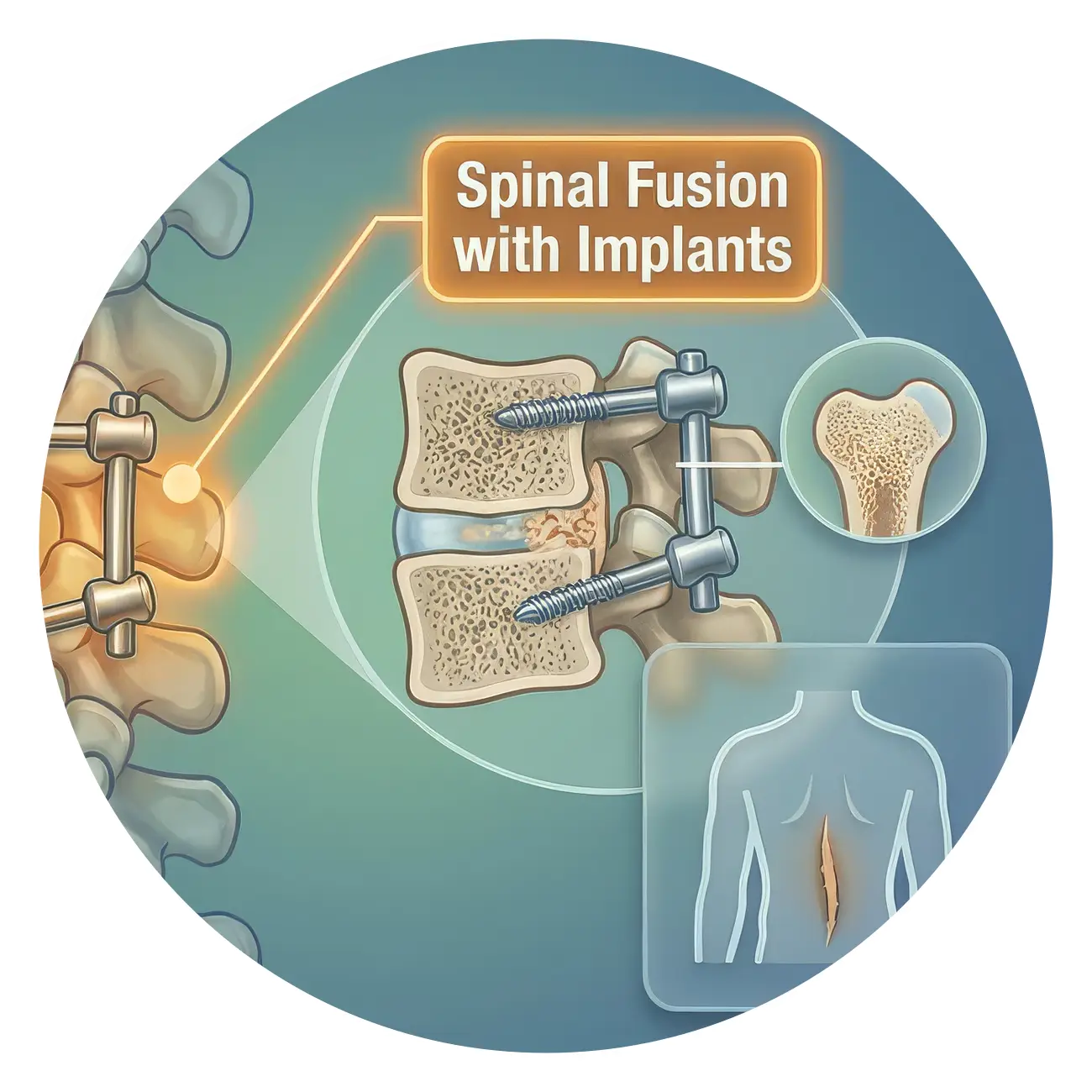
Failed Back Surgery Syndrome (FBSS) is a term used when back or leg pain continues or returns after spinal surgery. It does not mean the surgery was performed incorrectly. It means symptoms persist despite the procedure.
Persistent pain may result from scar tissue formation, nerve irritation, adjacent segment stress, incomplete pressure relief, or new disc degeneration. Spine surgery changes biomechanics, and additional factors may develop over time.
In some cases, decompression may be considered at levels not fused. Careful screening and review of imaging are required to determine candidacy.
Depending on the cause of persistent symptoms, non-surgical care such as rehabilitation, controlled chiropractic care, and decompression may help reduce irritation and improve function.
Recovery timelines vary depending on the procedure and individual healing. Persistent or worsening symptoms months after surgery should be evaluated.
Scar tissue does not typically disappear completely. However, symptoms related to irritation may sometimes be reduced through conservative management.


