If you’ve been told you have a bulging disc (sometimes called a disc bulge or disc protrusion), you’re not alone — and you’re not “doomed” to surgery.
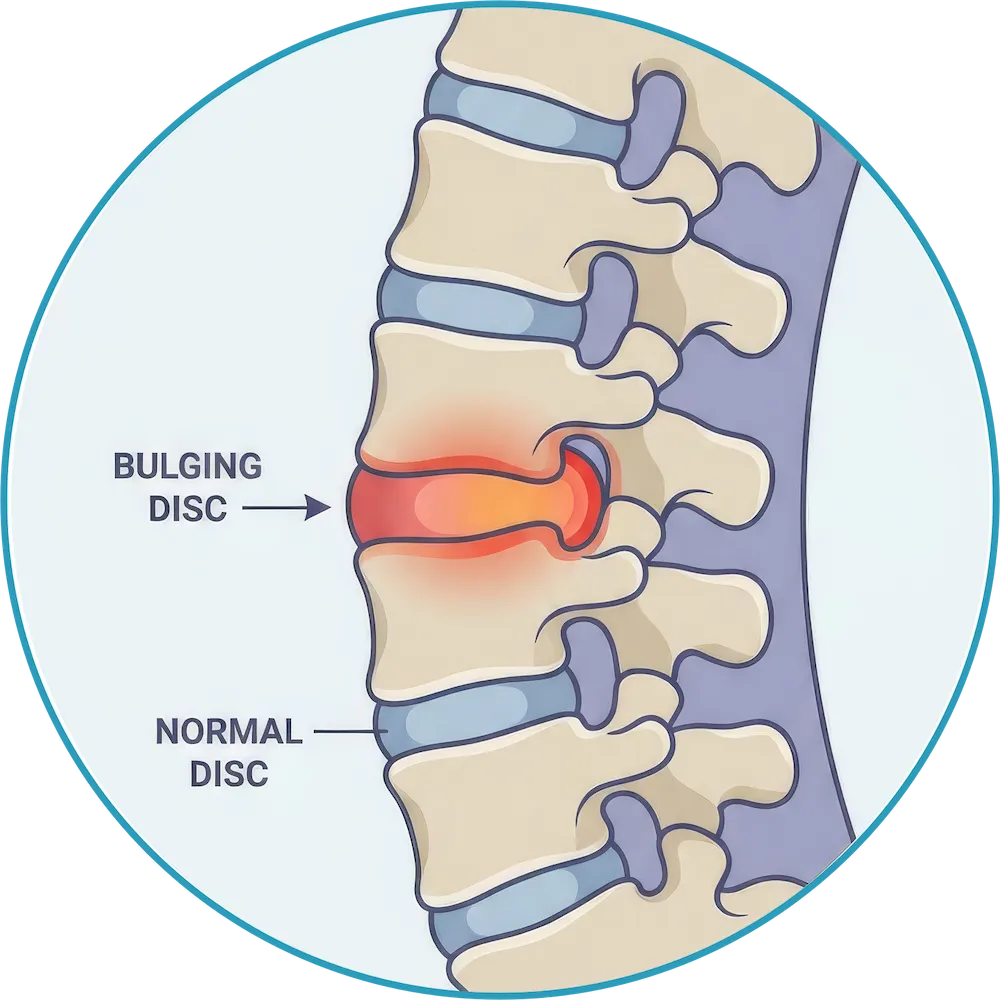
A bulging disc often represents an early stage of disc stress where the disc’s outer fibers are strained and the disc begins to expand outward. It can trigger back pain, buttock pain, sciatica-like symptoms, tingling, numbness, or stiffness, especially with sitting, bending, lifting, or long drives.
A bulging disc often doesn’t feel like a major injury—but it can still cause ongoing discomfort, stiffness, or nerve irritation that keeps coming back.
Many patients notice:
This is usually a sign that the underlying pressure hasn’t been fully addressed.
At Frisco Spinal Rehab, we build a plan focused on:
Call (972) 712-7744 or schedule an appointment to get clarity on what’s driving your symptoms and what to do next.
We serve patients in Frisco, Plano, Prosper, McKinney, Little Elm, The Colony, Allen and surrounding North Texas communities.
A bulging disc happens when a spinal disc extends beyond its normal boundary — typically due to repetitive loading, posture stress, lifting, or age-related disc changes. Unlike a herniation, a bulge is often a more gradual, broad-based change, and symptoms vary widely.
Bulging disc vs herniated disc (quick clarity)
Bulging discs can be painless, mildly annoying, or intensely limiting depending on inflammation and nerve irritation.
Common symptoms include:
Important: severe or progressive weakness, saddle numbness, or bowel/bladder changes require urgent medical evaluation.
Typical contributors we see include:
Bulging discs most commonly occur at the L4-L5 and L5-S1 levels in the lower spine. Bulging discs can also occur in the neck (cervical spine), causing arm pain, numbness, or weakness.
Some bulging discs improve with time—but others continue to cause recurring issues.
You may need more targeted care if:
In many bulging disc cases, DRX9000 spinal decompression becomes the missing step - addressing pressure and nerve irritation that other treatments do not fully resolve.
The goal is controlled, targeted unloading of the affected segment, which can help reduce nerve irritation.
Spinal decompression works by addressing that underlying pressure—helping reduce nerve root irritation and improving the mechanical environment of the spine in a way that traditional treatments, and even surgery, may not fully accomplish.
Not every bulging disc patient is a candidate, which is why careful screening and case selection are essential to ensure safety and the best possible outcome. We determine candidacy through examination findings and imaging when available.
For some patients, addressing this early can help prevent the condition from progressing or leading to more severe disc issues.
Flexion-Distraction:
Flexion-distraction therapy is an extremely gentle, rhythmic stretching technique that reduces pressure on discs and nerves while restoring movement—most patients describe it as one of the most relieving treatments they’ve ever felt.
Instrument-Assisted Adjustments:
Instrument-assisted adjustments use a precise, low-force handheld device to restore motion safely—making them ideal for post-surgical spines where traditional manual adjustments may feel too aggressive.
We use controlled, targeted chiropractic techniques designed to improve motion without forcing painful ranges. The goal is to reduce mechanical stress around the disc while improving function and mobility.
A bulging disc often reflects repetitive stress and poor load distribution. Structured rehab may include:
This phase is essential for preventing recurring episodes of bulging disc pain.
As part of your comprehensive plan, we may incorporate the ARRC red light therapy bed to support recovery.
Red light therapy is designed to:
While it does not correct the structural disc bulge itself, it can help improve comfort and tissue recovery as we address the underlying mechanical stress. Many patients report improved comfort and reduced muscular tightness when red light therapy is combined with decompression and rehab.
Muscle guarding often prolongs bulging disc pain. Targeted soft tissue therapy may help:
Our Goal
Our objective is not just short-term relief but improving spinal mechanics and reducing the likelihood that a disc bulge progresses into a more severe disc injury.
If your symptoms are more consistent with a true disc herniation, we will guide you to the appropriate treatment pathway.
It depends on:
Some people improve in weeks; others need a structured plan over months — especially if symptoms have been recurring for a long time.
A bulging disc is more concerning when:
Many bulging discs improve with conservative care and activity modification. The key is reducing repeated stress on the affected level while improving spinal stability.
If your bulging disc keeps coming back or isn’t improving, it may be time to address the underlying cause instead of just managing symptoms. We can help you figure out:
Call (972) 712-7744 or schedule an appointment today.


