Living with a herniated disc can be frustrating, especially if you’ve already tried medications, physical therapy, chiropractic care, or spinal injections without lasting relief. Many of the patients we see at Frisco Spinal Rehab aren’t looking for their first treatment—they’re looking for the treatment that finally works.
So why do some people eventually choose DRX9000 spinal decompression after trying everything else?
The answer lies in understanding what each treatment is designed to accomplish.
Most conservative treatments focus on managing pain rather than changing the mechanical problem causing it.
For example:
That doesn’t mean these treatments failed—they simply have different goals.
For many patients, combining therapies ultimately produces the best outcome.
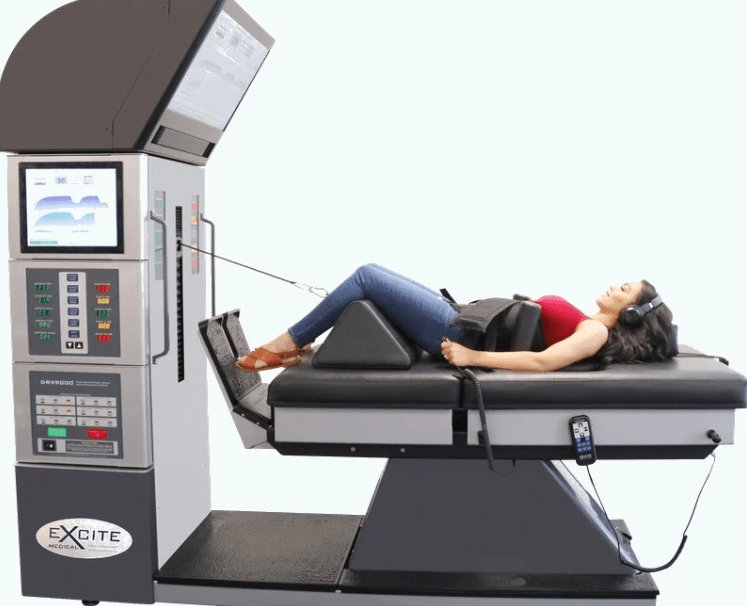
The DRX9000 is designed to address one of the underlying mechanical problems associated with many disc injuries: excessive pressure within the spinal disc.
Using a computerized treatment protocol, the DRX9000 gently applies distraction forces to the spine while carefully controlling muscle guarding. This creates negative intradiscal pressure, which research suggests may help:
Unlike treatments focused solely on symptom relief, spinal decompression attempts to improve the condition of the injured disc itself.
Many people don’t discover spinal decompression until they’ve already exhausted several other options.
Common reasons patients come to our office include:
These patients are often looking for another conservative option before considering surgery.
One of the biggest misconceptions online is that spinal decompression works for everyone.
It doesn’t.
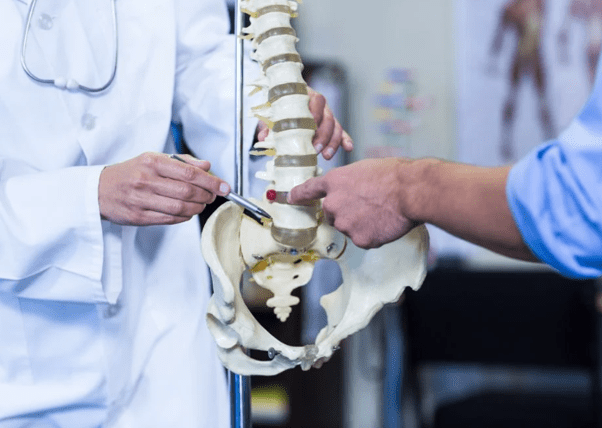
During your consultation, we evaluate:
Some patients are excellent candidates for DRX9000.
Others are better served with rehabilitation, injections, surgical consultation, or a combination of treatments.
An honest evaluation is one of the most important parts of the process.
Many patients are surprised by how comfortable DRX9000 treatment is.
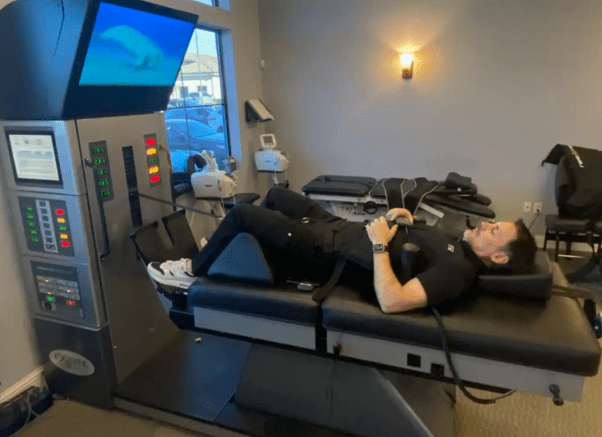
You lie comfortably on the treatment table while the computer precisely controls the amount of distraction applied to your spine. Most patients describe the treatment as a gentle stretching sensation rather than a painful procedure.
There are no injections, no anesthesia, and no recovery time after each session.
Sometimes.
Certain conditions—such as severe spinal instability, fractures, infections, tumors, or rapidly progressing neurological deficits—may require surgical management.
However, many patients with lumbar or cervical disc herniations improve without surgery when appropriate conservative treatment is started early.
The goal is always to recommend the least invasive treatment capable of producing the best long-term result.
At Frisco Spinal Rehab, we don’t rely on one treatment for every patient.
Depending on your condition, your treatment plan may include:
By addressing both the injured disc and the surrounding muscles, joints, and movement patterns, we aim to reduce pain while improving long-term spinal function.
If you’ve tried medications, physical therapy, injections, or other conservative treatments without lasting improvement, it doesn’t necessarily mean surgery is your only remaining option.
For properly selected patients, DRX9000 spinal decompression may provide another opportunity to reduce nerve irritation, improve function, and return to normal activities without an operation.
The first step is determining whether you’re actually a good candidate.
Can DRX9000 heal a herniated disc?
No treatment can guarantee that a disc completely “heals.” However, spinal decompression may help reduce disc pressure and create an environment that supports the body’s natural healing process.
How do I know if I’m a candidate?
A consultation, physical examination, and review of your MRI help determine whether spinal decompression is appropriate for your condition.
How many treatments are usually needed?
Most patients require a series of treatments over several weeks. The exact number depends on the severity of the disc injury, symptoms, and individual response.
Is DRX9000 better than surgery?
They serve different purposes. Surgery is sometimes necessary, but many patients are able to avoid it with successful conservative care. The appropriate treatment depends on your diagnosis.
Written by Dr. David Kaff, DC
Owner, Frisco Spinal Rehabilitation