If you’ve been dealing with persistent back or neck pain, you’ve probably heard terms like:
But there’s another potential source of pain that doesn’t always get the attention it deserves:
The facet joints.
Facet joint problems can cause significant neck or back pain, stiffness, and limited movement. And because facet pain can look similar to other types of spine pain, it isn’t always immediately obvious where the symptoms are coming from.
You may also hear several different terms used to describe facet joint problems, including facet arthropathy, facet arthritis, facet arthrosis, facet syndrome, and facet joint syndrome.
Understanding what these terms mean—and recognizing the typical pattern of facet-related pain—can help you better understand what’s actually driving your symptoms.
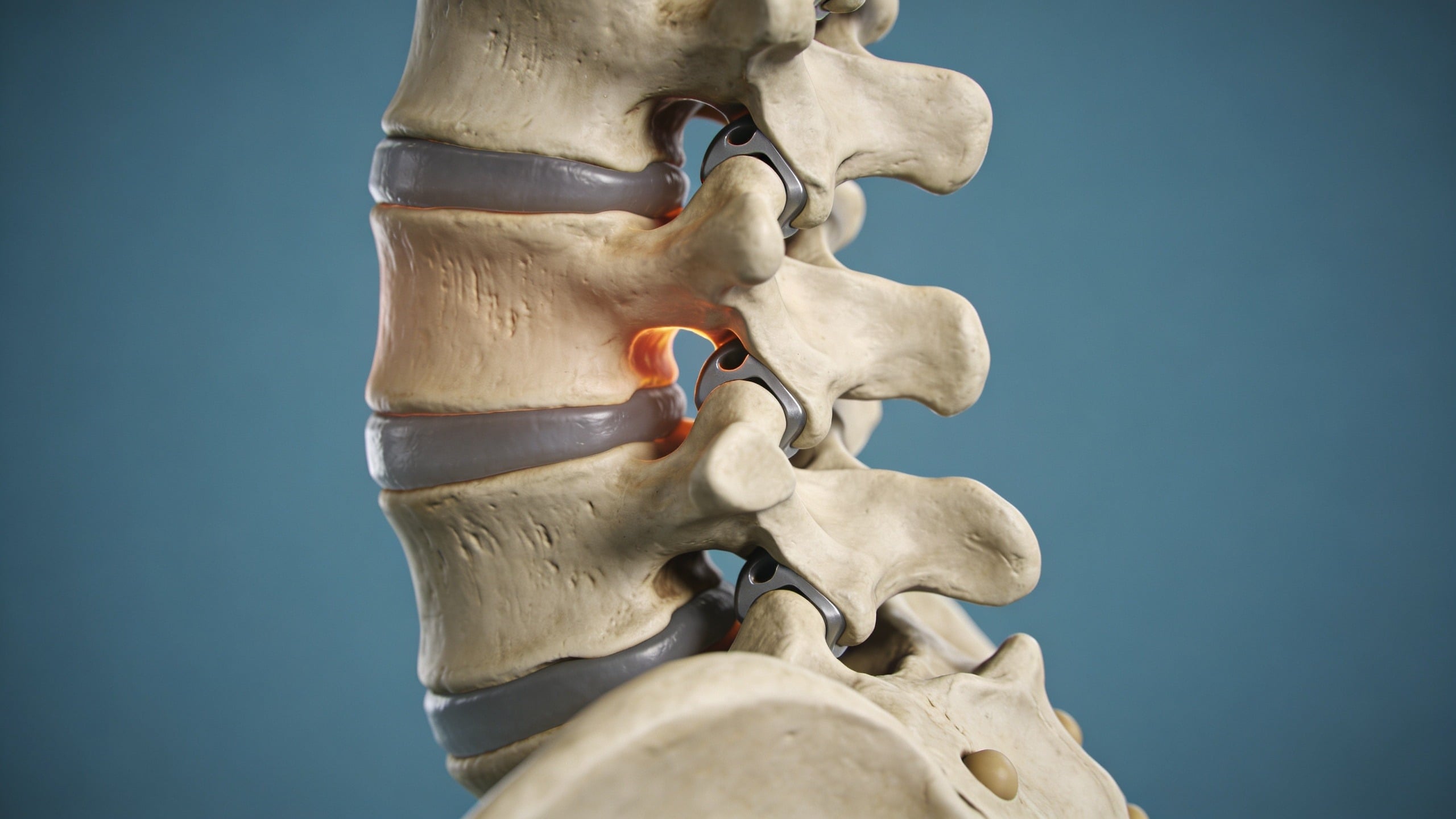
Facet joints are small joints located along the back of your spine.
Each vertebra has facet joints that connect with the vertebra above and below it. These joints help:
Think of the facet joints as part of the spine’s guidance and stabilization system.
Like other joints in the body, facet joints can become irritated, inflamed, stiff, injured, or affected by degenerative changes over time.
Facet joint pain is pain that originates from a facet joint or the structures surrounding it.
Facet pain may develop from repetitive mechanical stress, injury, inflammation, or degenerative changes within the joint.
One of the most important characteristics of facet-related pain is its location.
Unlike classic nerve-root pain, which may travel down an arm or leg, facet pain is usually axial and localized near the spine.
For example, a person with lumbar facet pain may be able to point to a relatively specific area of the lower back—often slightly to one side of the spine.
Someone with cervical facet pain may describe a specific area of pain or tenderness in the neck, sometimes extending into the shoulder or upper back.
Facet pain can sometimes produce referred pain into nearby areas, but it typically does not follow the long, traveling pattern associated with nerve-root irritation.
That localized pattern can be an important clue when trying to distinguish facet-related pain from disc or nerve pain.
Facet syndrome (also called facet joint syndrome) is a term commonly used to describe pain and symptoms believed to originate from the facet joints. The pain is often very localized, although it can sometimes refer into nearby areas. Facet syndrome can occur in the neck or lower back and may be associated with irritation, inflammation, or degenerative changes in the facet joints.
Facet arthropathy refers to degenerative changes or arthritis affecting the facet joints.
As we age, the cartilage and other structures within spinal joints can gradually change. Repetitive stress, previous injury, altered spinal mechanics, and degeneration elsewhere in the spine can also contribute.
Facet arthropathy may occur in:
You may also see terms such as:
These terms generally describe structural changes involving the facet joints.
However, there’s an important distinction:
Having facet arthropathy on an MRI or X-ray does not automatically mean that the facet joint is causing your pain.
Degenerative facet changes are common, particularly with age, and can occur in people who don’t have significant symptoms. The imaging findings need to be considered together with your symptoms and physical examination.
You may also hear the term facet syndrome or facet joint syndrome.
Facet syndrome generally refers to a pattern of pain and other symptoms associated with a problematic facet joint.
A simple way to think about the terminology is:
The terms are related, but they aren’t necessarily interchangeable.
A person can have facet arthropathy without significant pain. Conversely, a person’s symptoms may suggest facet involvement even when imaging findings alone don’t tell the whole story.
That’s why the clinical picture matters.
Facet pain often has a different pattern from classic disc or nerve pain.
Common symptoms can include:
In the neck, facet-related pain may remain concentrated around the neck or extend into the shoulder, upper back, or back of the head.
In the lower back, pain may remain localized or refer into the buttock or upper thigh.
The pattern varies from person to person, and other spinal structures can produce similar symptoms.
The facet joints are located very close to the back of the spine and contain sensory nerve endings that can respond to stress and irritation.
When a facet joint becomes painful, the discomfort can therefore be felt right around the affected joint or nearby paraspinal tissues.
This is one reason a patient may say:
“I can put my finger right on where it hurts.”
That type of very specific, localized pain can be an important part of the clinical picture.
It doesn’t prove that the facet joint is the pain generator by itself—but it can help guide the evaluation.
Facet pain and disc-related pain can overlap, which is why determining the source of pain isn’t always straightforward.
But there’s an important point:
You can have more than one problem at the same time.
For example, a person may have degenerative disc changes, facet arthropathy, and muscle guarding simultaneously.
That’s why simply looking at an MRI report—or simply identifying where the pain is located—isn’t enough to determine the entire cause of the problem.
Facet problems can occur throughout the spine, but the symptoms can differ depending on the location.
Facet degeneration in the neck may contribute to:
Facet degeneration in the lower back may contribute to:
Facet-mediated pain generally does not produce the classic neurological pattern of pain traveling below the knee or down an arm that can occur with nerve-root compression.
There isn’t always one single cause.
Facet joint problems may be associated with:
Because the discs and facet joints work together as part of the spinal motion segment, changes in one part of the spine can affect the mechanical demands placed on another.
This is one of the most important parts of understanding facet pain.
An MRI or X-ray can show facet arthropathy, but imaging alone cannot tell you whether a particular facet joint is actually responsible for your pain.
A proper evaluation may consider:
Physical examination is particularly important because several spinal structures can be stressed by the same movement.
In certain cases, medical specialists may use diagnostic medial branch blocks to help determine whether facet joints are contributing to pain.
The goal isn’t simply to find something abnormal on an image.
The goal is to determine whether the abnormality actually matches the patient’s symptoms.
This is where many patients become frustrated.
They may receive temporary relief from:
But the pain returns when normal activity resumes.
That’s because the painful joint is part of a larger mechanical system.
When a facet joint becomes irritated, the surrounding muscles may tighten or guard the area. Movement can become restricted. The person may begin moving differently to avoid pain.
That can create a cycle of:
Irritation → protective muscle tension → restricted movement → altered mechanics → continued stress
Breaking that cycle may require more than simply trying to reduce pain temporarily.
Treatment depends on what is actually contributing to the pain.
There is no single treatment that is appropriate for every person with facet arthropathy or facet syndrome.
Conservative treatment may include:
For persistent facet-mediated pain, medical specialists may also consider treatments such as diagnostic medial branch blocks or radiofrequency ablation in appropriately selected patients.
At Frisco Spinal Rehab, our approach is generally focused on addressing the overall mechanical and recovery picture, rather than assuming every case of facet pain requires the same treatment.
Facet joints are part of the spine’s load-sharing system.
Depending on the patient’s condition, reducing excessive mechanical stress may help calm an irritated area and make movement more comfortable.
In appropriate patients, advanced spinal decompression may be incorporated into a broader treatment plan.
Spinal decompression isn’t a direct treatment for facet arthritis, and it isn’t appropriate for everyone with facet pain.
The goal is to determine whether changing the mechanical environment of the spine makes sense for the individual patient.
Pain can cause people to move differently.
The surrounding muscles may tighten. Certain movements may become restricted. The patient may begin avoiding normal motion because they expect it to hurt.
Treatment may therefore include targeted:
The goal is to restore as much comfortable, functional movement as possible while reducing unnecessary stress on the affected area.
MLS® Laser Therapy may also be incorporated into a treatment plan when appropriate.
MLS Laser Therapy uses specific wavelengths of light as a form of photobiomodulation. It is used clinically to help manage pain and inflammation and to support tissue recovery.
For someone dealing with a painful, irritated area around the spine, laser therapy can be used as a non-invasive adjunct to the broader treatment program.
The goal isn’t to claim that a laser can “repair” facet arthritis.
Instead, it can be one tool used to help manage the painful inflammatory component and make the area more comfortable while the patient works on mobility, strength, and mechanical factors.
Depending on the individual situation, additional therapies may be incorporated to support recovery.
At Frisco Spinal Rehab, this may include red-light therapy/ARRC therapy and other supportive modalities.
These therapies are intended to complement—not replace—the underlying rehabilitation and mechanical approach.
The objective is to create an environment in which the patient can move better, participate more comfortably in rehabilitation, and progress toward normal activity.
Facet pain is rarely just about one structure in isolation.
A patient may have:
That is why treatment often needs to be individualized.
Rather than asking:
“What treatment fixes facet pain?”
A better question is:
“What factors are contributing to this person’s pain, and what combination of treatments can address those factors?”
Facet involvement may be worth considering if your pain:
These characteristics don’t prove that the facet joints are responsible. They are simply clues that can help guide a more complete evaluation.
Don’t panic.
“Facet arthropathy” on an MRI means that degenerative changes are visible in the facet joints.
It does not automatically mean that your facet joints are the primary source of your pain.
This is an important distinction because degenerative changes are common with aging and don’t always correlate perfectly with symptoms.
Instead of looking at the MRI in isolation, your symptoms, examination findings, movement patterns, and imaging should be considered together.
The important question is:
Does the imaging finding actually match the location and behavior of your pain?
Yes. Facet-mediated pain is typically axial, meaning it is concentrated around the spine rather than following a long nerve pathway. It may be quite localized to one side of the neck or lower back, although referred pain into nearby areas can occur.
Facet arthropathy is degeneration or arthritis affecting the facet joints of the spine. It can contribute to pain, stiffness, and reduced movement, but imaging evidence of facet arthropathy does not necessarily mean the joint is causing someone’s symptoms.
Facet syndrome, also called facet joint syndrome, generally refers to a pattern of pain and symptoms associated with facet joint involvement.
Yes. Cervical facet arthropathy can contribute to localized neck pain and stiffness and may sometimes refer pain into the shoulder, upper back, or head.
Yes. Lumbar facet arthropathy can contribute to localized lower back pain and stiffness, particularly with certain extension, rotation, or loading movements.
Typical facet-mediated pain is different from classic sciatica caused by irritation or compression of a lumbar nerve root. Facet pain may refer into the buttock or thigh, but it generally does not follow the typical nerve-root pattern down the leg.
Some episodes of facet-related pain may improve with time, activity modification, rehabilitation, and conservative care. However, degenerative facet arthropathy itself is a structural change that generally cannot simply be reversed. The focus is usually on managing symptoms, improving function, and addressing contributing mechanical factors.
Spinal decompression is not a direct treatment for facet arthritis. In selected patients, however, it may be incorporated into a broader treatment plan intended to reduce mechanical stress and improve spinal function.
MLS® Laser Therapy may be used as a non-invasive adjunct to help manage pain and inflammation around an affected area. It should be viewed as one component of a broader treatment strategy rather than a treatment that reverses facet degeneration.
That’s possible. Degenerative changes in the spine can involve multiple structures at the same time. The important question is which findings actually correspond with your symptoms and examination.
Facet joint pain is a common but sometimes overlooked contributor to neck and back pain.
One of its most recognizable characteristics is that it is often very localized near the spine, rather than producing the traveling pain pattern associated with nerve irritation.
You may hear the condition described as:
These terms are related, but they don’t all mean exactly the same thing.
And if an MRI shows facet arthropathy, that finding needs to be considered in the context of your actual symptoms—not treated as an explanation by itself.
The most useful approach is to determine what structures are involved, what is contributing to the irritation, and what can be done to improve pain, movement, and function.
At Frisco Spinal Rehab, we can evaluate the bigger picture and determine whether treatments such as chiropractic care, rehabilitation, spinal decompression, MLS® Laser Therapy, and other supportive therapies may be appropriate for your particular situation.
If your pain keeps coming back, is limiting your activity, or hasn’t responded to the treatments you’ve already tried, a more comprehensive evaluation may help clarify what’s going on.
The goal isn’t simply to find an abnormality on an MRI.
It’s to understand why you’re hurting and develop a treatment approach that makes sense for you.
Related Reading:


