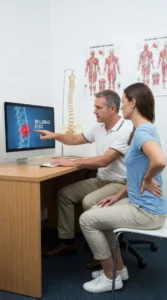
Back pain is not considered a common direct side effect of Ozempic.
However, several indirect factors may explain why some patients notice spinal discomfort after starting GLP-1 medications.
Possible explanations include:
One emerging concern with GLP-1 medications is that some weight loss may include lean muscle mass.
When core and spinal stabilizing muscles weaken, it can lead to:
• increased spinal loading
• reduced support for discs and joints
• postural instability
• new or worsening back pain
The spine depends heavily on strong surrounding muscles to stay stable.
Do Ozempic and GLP-1 Drugs Cause Muscle Loss?
Rapid Weight Loss and Back Pain
Losing a large amount of weight — especially quickly — changes how your body distributes weight and balances itself.
This shift can temporarily alter:
• walking patterns
• pelvic alignment
• spinal loading
• core stability
For some people, the body simply needs time to adapt to a new center of gravity.
Many adults already have underlying spinal issues such as:
• disc bulges
• herniated discs
• degenerative disc disease
These conditions can remain quiet or mildly symptomatic for years.
Lifestyle changes — including exercise increases, weight changes, or altered movement patterns — may cause these underlying problems to become more noticeable.
Ironically, weight loss often allows people to become more physically active.
While this is beneficial overall, increased activity can sometimes expose spinal conditions that were previously dormant.
Examples include:
• lifting heavier objects
• starting new exercise programs
• longer walking or standing times
If you are taking Ozempic or another GLP-1 medication and develop persistent back pain, it may be worth having your spine evaluated — especially if symptoms include:
• pain radiating down the leg (sciatica)
• numbness or tingling in the arms or legs
• pain that worsens with sitting
• pain that improves when lying down
• weakness in the arms or legs
These symptoms can sometimes indicate nerve compression from a disc problem.
Interestingly, gradual weight loss is usually beneficial for spinal health.
Excess body weight increases pressure on spinal discs. Losing weight can reduce this load and may improve symptoms over time.
However, rapid weight loss combined with muscle loss may temporarily destabilize the spine until strength is rebuilt.
This is why maintaining:
• core strength
• spinal mobility
• proper posture
is important during major body composition changes.
If back pain turns out to be related to a disc issue rather than the medication itself, several conservative treatments may help.
These may include:
• spinal decompression therapy
• targeted rehabilitation exercises
• chiropractic care
• posture correction strategies
• soft tissue therapy
Non-surgical approaches aim to reduce pressure on spinal discs and nerves while restoring function.
Another concern some people experience with rapid weight loss is changes in skin elasticity or mild sagging skin.
Skin adapts over time as body composition changes, but the process can be slower when weight loss occurs quickly. Supporting circulation, collagen health, and tissue recovery may help the body adjust more effectively.
Some clinics use red light therapy to support skin health and tissue recovery during major body changes.
Red light therapy works by exposing the skin to specific wavelengths of light that may help stimulate cellular activity and circulation. At Frisco Spinal Rehab, patients sometimes incorporate treatments such as the ARRC LED red light therapy bed as part of a broader wellness program to support tissue recovery and overall musculoskeletal health.
While results vary and it is not a treatment for loose skin, many patients use red light therapy to help support the body during periods of rapid change such as weight loss or increased physical activity.
Ozempic itself is not typically known to directly cause back pain.
However, the rapid weight loss and lifestyle changes associated with GLP-1 medications may sometimes reveal or contribute to underlying spinal issues.
If you experience persistent back pain while taking Ozempic, it may be worth evaluating whether the source is:
• muscular
• postural
• disc related
• nerve compression
Understanding the true cause is the first step toward finding the right solution.
Joint and muscle discomfort are occasionally reported with GLP-1 medications, but they are not among the most common side effects.
For many people, gradual weight loss reduces stress on spinal discs and can improve symptoms.
You should never stop a medication without discussing it with your prescribing physician. A spinal evaluation can help determine whether the pain is related to the spine rather than the medication itself.
Yes. Changes in activity level, posture, and spinal loading during weight loss can sometimes make an existing disc issue more noticeable.
If you live in Frisco, Prosper, McKinney, or the surrounding North Texas area, our team at Frisco Spinal Rehab specializes in evaluating disc-related back and neck pain and developing non-surgical treatment plans tailored to each patient.


