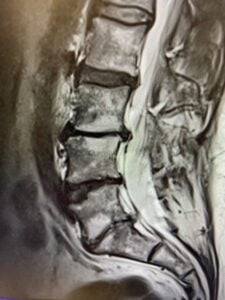
Seeing the words “bulging disc” on an MRI report can raise a lot of questions, especially if you’ve been dealing with back pain, leg pain, or recurring flare-ups.
Many people immediately wonder:
“Is a bulging disc serious?”
“Is that the same as a herniated disc?”
“Is this why I’m in pain?”
“Is this something that gets worse over time?”
These are very common concerns. The terms can sound alarming, and it’s not always clear what they actually mean.
Discs sit between the bones of the spine and act as cushions. They help absorb pressure and allow the spine to move smoothly.
A bulging disc means the outer edge of the disc is extending outward slightly beyond where it normally sits.
Think of it as the disc being pushed outward evenly around its edge, rather than one specific spot pushing through.
This can happen due to:
Normal aging
Repetitive strain
Years of sitting or bending
Gradual wear over time
It’s one of the most common findings on spinal MRIs.
This is where people get confused.
A bulging disc:
The disc extends outward more evenly
The outer layer is still mostly intact
Often develops slowly over time
A herniated disc:
A portion of the disc pushes out more in one direction
Can irritate nearby nerves more directly
Sometimes linked to a specific injury or event
Both can be present at the same time, and both can affect how the spine handles pressure.
This is one of the most surprising parts for patients.
Many people have bulging discs and don’t feel anything at all. Others have similar MRI findings and experience:
Tingling or numbness
Pressure when sitting
The difference often depends on whether the disc is:
Causing sensitivity in nearby structures
Under repeated stress from daily activity
The MRI shows structure, but symptoms depend on how the area is functioning.
Bulging discs are commonly seen alongside:
Herniations
Narrowing around nerves (stenosis)
These changes often develop gradually together over time, which is why MRI reports sometimes list multiple findings.
Seeing several terms at once can feel overwhelming, but they’re often part of the same overall picture.
People with bulging discs often notice:
Pain that flares up
Then settles down
Then returns again later
This happens because the disc can become irritated during certain activities, such as:
Sitting too long
Driving
Lifting
Bending forward
When irritation builds, symptoms may increase. When things calm down, the pain may improve for a while.
Not necessarily.
Many people worry that a bulging disc means their spine will continue to deteriorate quickly. But in many cases:
Changes happen slowly
Symptoms stay stable
Flare-ups come and go
Some people live with bulging discs for years without major progression.
Many people discover they have a bulging disc after:
Recurring back pain
Leg symptoms that won’t go away
Physical therapy that helped but didn’t last
At that point, they’re trying to understand whether the disc finding explains what they’ve been feeling.
At Frisco Spinal Rehab, we often see patients who were told they have bulging discs and weren’t sure if that was something serious. In many cases, it helps explain why certain positions, movements, or activities trigger recurring symptoms.
A bulging disc is a very common finding on MRI and simply means the disc is extending outward beyond its usual space. It’s different from a herniated disc but can still contribute to back or leg symptoms in some people.
The most important factor isn’t just what the MRI shows — it’s how your body feels and how much symptoms affect your daily life. Understanding what a bulging disc actually means can help take some of the fear out of seeing it listed on a report.


