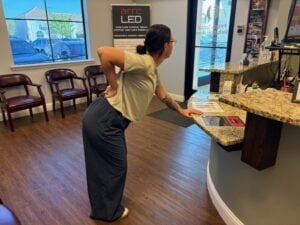
Pickleball has exploded in popularity across Frisco, Plano, McKinney, and the surrounding North Texas area.
It’s fast, competitive, and incredibly fun.
But there’s something most players don’t expect…
A sudden onset of back pain, sciatica, or even a disc injury.
At our clinic in Frisco, we’re seeing a growing number of patients who say the same thing:
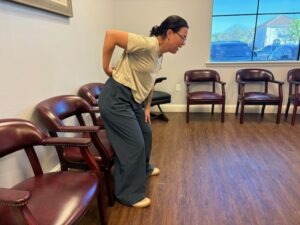
“I felt fine… then after playing pickleball, my back locked up.”
If that sounds familiar, here’s what may be happening.
Pickleball may look low-impact, but it places unique stress on your spine.
Repetitive twisting (especially on serves and returns)
Quick lateral movements
Sudden bending and reaching
Playing multiple games without rest
Poor warm-up or mobility
For many adults (especially 35+), these movements can aggravate underlying spinal issues that were already there — just not symptomatic yet.
This is one of the most common injuries.
Symptoms:
Sharp low back pain
Pain shooting into the leg (sciatica)
Difficulty standing up straight
Pain when sitting
This is often caused by:
Muscle spasms
Joint irritation
Early disc involvement
Patients often say:
“I literally couldn’t stand up straight after the game.”
The twisting + bending combination can irritate spinal nerves.
Symptoms:
Burning pain down the leg
Numbness or tingling
Pain worse when sitting or driving
Many players already have mild disc degeneration without knowing it.
Pickleball can:
Accelerate symptoms
Trigger inflammation
Turn a “silent” issue into real pain
Frisco, Prosper, and McKinney have:
A large active adult population
Rapid growth in pickleball courts and leagues
Highly competitive recreational players
Translation:
👉 More people playing harder, more often, with less recovery.
Early symptoms are your warning sign.
Playing through pain often makes it worse.
Many people try to “stretch it out” — which can aggravate disc injuries.
Not all back pain is the same.
You need to determine:
Muscle vs disc vs nerve
Severity
Whether imaging is needed
For patients with disc-related pain, we often use a combination of:
Spinal decompression therapy (DRX9000)
Targeted chiropractic care
Class IV laser therapy or Photobiomodulation
Soft tissue therapy
Rehab and stabilization exercises
The goal:
👉 Reduce pressure on the disc
👉 Calm inflammation
👉 Restore normal movement
In many cases — yes.
But only if:
The underlying issue is addressed
You modify activity temporarily
You rebuild stability and mobility
Many of our patients return to pickleball pain-free after treatment.
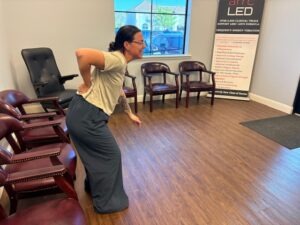
If you experience:
Pain shooting down your leg
Numbness or tingling
Weakness in the leg or foot
Pain that doesn’t improve after a few days
You should be evaluated as soon as possible.
If you’re dealing with back pain after pickleball, you’re not alone.
We specialize in treating:
Herniated discs
Sciatica
“Back locked up” episodes
📞 Schedule a consultation to find out what’s actually causing your pain — and what can be done about it.
Yes, it can — especially in adults over 30–40.
Pickleball involves repetitive twisting, bending, and quick directional changes. These movements can place stress on the spinal discs, particularly if there is already underlying degeneration.
For some players, pickleball doesn’t create the problem — it simply triggers symptoms that were already developing silently.
Back pain after pickleball is usually caused by:
Muscle strain or fatigue
Joint irritation
Disc pressure or bulging
Poor warm-up or mobility
If the pain is sharp, persistent, or travels into the leg, it may indicate a disc or nerve issue rather than just muscle soreness.
Not inherently.
Pickleball is a great activity, but it becomes risky when:
You play too frequently without recovery
You have poor core stability
You have underlying disc degeneration
You push through pain
With proper conditioning and treatment, many people can safely continue playing.
If you have active sciatica, it’s usually best to pause temporarily.
Continuing to play can:
Increase nerve irritation
Prolong recovery
Worsen disc issues
Once the underlying cause is treated, most patients can gradually return to playing.
The fastest recovery depends on the cause.
In general:
Reduce aggravating activity
Get an accurate diagnosis
Use targeted treatment (not just rest or random stretching)
For disc-related issues, treatments like spinal decompression and targeted therapy may help reduce pressure and inflammation.
You should seek evaluation if you have:
Pain lasting more than a few days
Pain shooting down the leg
Numbness or tingling
Difficulty standing up straight
Repeated “back locking up” episodes
These are often signs of a deeper spinal issue that should not be ignored.


