Understanding Your Options Before Considering Spine Surgery
Back pain can be frightening—especially when it travels into your leg, causes numbness, or makes you wonder if surgery is your only option.
Every day, people search questions like:
The good news is that many disc injuries improve with conservative care. While surgery is the right choice for some patients, many others recover through a carefully designed, non-surgical treatment program.
At Frisco Spinal Rehab, we’ve developed the Frisco Disc Recovery Protocol—a comprehensive approach that combines advanced technology, hands-on care, rehabilitation, and individualized treatment planning to help qualified patients recover naturally whenever possible.
Your spine is made up of bones called vertebrae.
Between each vertebra sits a spinal disc.
Think of each disc as a shock absorber.
It cushions movement every time you:
Each disc has two parts:
When healthy, discs allow your spine to move smoothly while protecting nearby nerves.
Patients often use these terms interchangeably, but they’re not exactly the same.
Bulging Disc
The outer wall of the disc remains intact but begins to bulge outward.
This often develops gradually through years of wear and tear.
Herniated Disc
A herniated disc occurs when the outer fibers weaken enough for part of the inner material to push outward.
Because herniations may place greater pressure on nearby nerves, they are more likely to produce:
Both conditions can often improve without surgery depending on the severity of the injury.
One of the biggest misconceptions about disc injuries is that they never heal.
In reality, many do.
However, spinal discs heal differently than muscles.
Unlike muscles, discs have very little direct blood supply.
Instead, they receive nutrients through a slow process called diffusion from the surrounding vertebrae.
When a disc remains compressed, inflamed, or irritated, this healing process becomes much more difficult.
Creating a healthier environment around the injured disc may allow the body to recover more effectively over time.
Many people assume the disc itself causes all the pain.
Often, it is the nearby nerve that creates the most significant symptoms.
When a disc bulges or herniates, it may:
Depending on which nerve is affected, symptoms may include:
Pain that radiates away from the spine usually means a nerve has become irritated.
In the neck, this may produce:
In the lower back, patients may experience:
Identifying which nerve is involved helps determine the most appropriate treatment plan.
No.
Many patients improve with conservative treatment.
Surgery may become necessary when there is:
Fortunately, many patients never reach that point.
A thorough examination helps determine whether conservative treatment is appropriate.
No two-disc injuries are exactly alike.
That’s why we don’t rely on a single treatment.
Instead, every patient receives a personalized plan built around the underlying cause of their symptoms.
Depending on your diagnosis, your treatment may include:
Every treatment plan is customized based on the individual—not every patient receives every therapy.
For patients with qualifying disc-related conditions, DRX9000 spinal decompression is often a key part of treatment.
Unlike traditional traction, the DRX9000 uses computerized technology to deliver precise, controlled decompression to specific spinal levels.
The goal is to:
For many patients, decompression addresses the mechanical stress contributing to their symptoms.
One of the unique features of the Frisco Disc Recovery Protocol is our combination of MLS robotic laser therapy and acupuncture.
While these therapies work differently, they often complement one another.
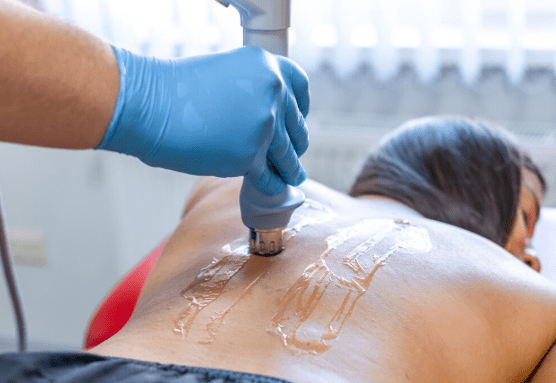
The MLS M6 delivers therapeutic laser energy over a broad treatment area and may help support the body’s normal healing response, improve local circulation, and reduce inflammation in muscles and soft tissues.
Acupuncture stimulates carefully selected points that may help reduce muscle tension, influence the body’s natural pain-modulating mechanisms, and improve overall function.
Rather than choosing one or the other, we often combine these therapies when clinically appropriate because they address different aspects of the recovery process.
Many patients appreciate this comprehensive approach while their injured spinal tissues continue to recover.
Technology is only part of successful spine care.
Our doctors evaluate:
Hands-on care may include:
This individualized care helps restore normal movement while supporting the improvements achieved through other treatments.
Pain relief is only the beginning.
One of the biggest reasons back or neck pain returns is because the muscles supporting the spine have never been retrained.
As symptoms improve, rehabilitation becomes increasingly important.
Your exercise program may focus on:
The goal is to reduce unnecessary stress on healing spinal tissues while improving the way your body moves every day.
Healing doesn’t stop when your appointment ends.
Patients receive personalized guidance regarding:
These simple daily habits often play an important role in maintaining long-term results.
Every patient heals at a different pace.
While every case is unique, many patients experience recovery in stages.
Phase 1: Calm the Irritation
Reduce pressure on irritated nerves and improve comfort.
Phase 2: Restore Mobility
Improve spinal movement while supporting disc healing.
Phase 3: Rebuild Strength
Restore stability through targeted rehabilitation and functional movement training.
Phase 4: Protect Your Results
Maintain improvements through exercise, posture, and healthy movement habits.
For more than 25 years, Frisco Spinal Rehab has focused on helping patients recover from spine-related conditions using conservative care whenever appropriate.
Our clinic combines advanced technology—including three DRX9000 spinal decompression systems, MLS robotic laser therapy, acupuncture, hands-on chiropractic care, soft tissue therapy, and personalized rehabilitation—to create customized treatment plans for every patient.
Rather than chasing symptoms, we focus on identifying the underlying cause of your pain and building a plan designed to support long-term recovery.
Many can. The likelihood depends on the size and location of the injury, your symptoms, neurological findings, and overall health.
A comprehensive examination, combined with your medical history and any available imaging, helps determine whether a disc is contributing to your symptoms.
Most patients describe DRX9000 treatment as gentle and comfortable. Treatment plans are customized based on the patient’s condition.
Yes. When clinically appropriate, we often combine these therapies because they address different aspects of healing and recovery.
Recovery varies from person to person. Some patients improve within a few weeks, while others require a longer treatment program depending on the severity and duration of their condition.
If you’re living with a herniated disc, bulging disc, sciatica, neck pain, or chronic back pain, the first step is understanding why you’re hurting.
At Frisco Spinal Rehab, we’ll perform a comprehensive evaluation, review any imaging studies, and determine whether the Frisco Disc Recovery Protocol is appropriate for your condition.
Our goal is simple: help you move better, feel better, and return to the activities you enjoy through personalized, evidence-informed, non-surgical spine care whenever appropriate.


