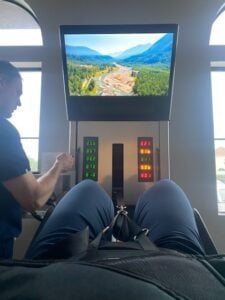
If you’ve been Googling things like “decompression therapy near me,” “spinal decompression doctor,” or “is spinal decompression covered by insurance,” you’re not alone. In Frisco (and all over North Texas), people are looking for non-surgical options that can reduce pain and help them get back to normal life—especially when sciatica, a bulging disc, or a herniated disc is involved.
This guide is designed to answer the most common questions we see—quickly, clearly, and without hype.
Quick Answer :
Spinal decompression therapy is a non-surgical treatment that uses a specialized decompression machine/table to apply gentle, controlled traction to the neck or low back. It’s commonly used for disc-related pain, sciatica, bulging discs, and herniated discs. Coverage is usually not available, and the best candidates are those who have failed basic care and want to avoid injections or surgery when appropriate.
No — not directly.
An X-ray is great for showing bones (alignment, arthritis, fractures, degenerative changes), but it does not show the disc itself. That’s why someone can have a “normal X-ray” and still have significant disc pain.
Reduced disc space height (indirect clue)
Arthritic changes
Instability patterns
Other structural issues
MRI is the best standard imaging for discs and nerves.
Yes.
MRI is typically the imaging that shows:
Disc bulges
Disc herniations
Nerve root compression
Annular tears (sometimes)
Stenosis patterns
It’s also the best imaging to clarify confusing terms patients see online such as:
“herniated disc in MRI”
“herniated disc MRI neck”
“fragment disc / sequestered disc / sequestrated disc”
That term usually means a piece of disc material has separated from the main disc and migrated. People may also see “sequestered fragment disc” or “fragment disc.” These cases can be more complex and require proper clinical correlation (symptoms + exam + imaging).
Important: MRI findings don’t automatically mean surgery. The key is whether the imaging matches the symptoms.
Spinal decompression therapy is a non-surgical approach that uses a specialized decompression device (often called a spinal decompression machine or back decompression machine) to reduce compressive forces on the spine.
Patients commonly search:
spinal decompression therapy
spine decompression therapy
decompression treatment
decompression for herniated disc
decompression for bulging disc
sciatica decompression therapy
spinal decompression treatment near me
decompression therapy near me
To create a controlled decompressive effect so irritated tissues can calm down and healing processes can be supported.
Most clinics follow a structure like this:
Exam + case review (symptoms, history, movement testing)
Determine candidacy (who is likely to benefit, who is not)
Set a protocol (number of sessions, intensity ramp, symptom tracking)
Decompression sessions (often 20–30 minutes depending on the system)
Supportive care (mobility/rehab, activity modifications, sometimes adjunct therapies)
Patients often ask about the “back decompression bed” or “decompression table for back pain.” That’s just consumer language for the specialized equipment used to deliver a consistent traction/decompression pattern.
People searching “spinal decompression doctor” usually want someone who can:
Evaluate if the disc is the likely pain generator
Rule out red flags
Explain MRI and X-ray differences
Recommend a plan (not just sell sessions)
In Frisco, spinal decompression is commonly offered through:
Chiropractic/rehab clinics
Physical medicine settings
Some integrated practices
The most important factor isn’t the label—it’s whether the clinic:
Has experience with disc and sciatica cases
Uses an appropriate decompression system
Tracks outcomes and adjusts the plan
Often sought for:
Neck pain with radiating arm symptoms
Certain headache patterns (case-dependent)
Cervical disc bulge/herniation symptoms
Often sought for:
You may also see searches like:
decompression machine for neck
lumbar decompression
lumbar decompression machine
cervical disk decompression / cervical disc decompression
Spinal decompression tends to be considered when:
Symptoms have persisted despite basic care
There is disc-related pain or sciatica pattern
The case is not an obvious surgical emergency
The patient wants a non-surgical option
The best outcomes usually happen when decompression is paired with a rehab plan that addresses:
Core and hip strength
Mobility limitations
Movement mechanics
Work and activity modifications
Decompression can be a tool inside a larger rehab strategy, not a stand-alone magic trick.
Sciatica is a symptom pattern—usually related to irritation/compression of lumbar nerve roots.
That’s why people search:
spinal decompression for sciatica
decompression therapy for sciatica
sciatica decompression treatment
sciatica decompression therapy
decompress sciatica
Decompression may help certain sciatica cases, especially when disc-related compression and inflammation are involved. The key is correct diagnosis and candidacy.
If there is progressive weakness, bowel/bladder changes, or severe neurologic deficits, that’s not a “try decompression” situation—that’s urgent medical evaluation.
This is one of the biggest keyword gaps you listed, and it converts extremely well.
Answer: Normally decompression is not covered.
Some plans cover certain components (evaluation, therapy codes) but not a specific “decompression package.” Others have chiropractic benefits that apply. Almost all are cash-based for decompression.
Best practice: Have the clinic verify benefits or give you a clear written estimate so you can decide with confidence.
Patients commonly search brand names and equipment terms, including:
vax d near me
hill dt therapy near me
spinal decompression machine
decompression therapy machine
spinal decompression therapy machine
spinal stretch machine
chiropractor stretching machine / chiropractor stretch machine
decompression device
Here’s the honest way to think about it:
These are different systems and approaches to delivering decompression/traction.
What matters most is:
Proper patient selection
Protocol quality (progression + symptom tracking)
Clinician experience
A full plan (rehab + lifestyle factors), not just the machine
Some people land on scary searches like:
surgical spinal decompression
neck vertebrae surgery
surgery for bulging disk in back
Non-surgical spinal decompression therapy is a conservative option that may be considered before surgery in appropriate cases.
Surgery may be recommended when:
There is progressive neurological loss
Severe structural compression is causing significant deficits
Conservative care has been exhausted and quality of life is unacceptable
A spine specialist determines it’s the safest path forward
If you’re unsure, it’s completely reasonable to ask for:
Imaging review
A second opinion
A clear explanation of risk/benefit
While protocols vary, a reasonable plan typically includes:
A structured trial period
Symptom tracking (pain, walking tolerance, sleep, functional changes)
Adjustments to intensity based on response
Guidance on activities that flare symptoms
If you’re searching “spinal decompression therapy reviews,” you’re doing the right thing—look for consistency, clarity, and realistic expectations, not miracle claims.
If you’re in Frisco and searching decompression therapy near me or looking for a spinal decompression doctor, the next step is simple:
Get evaluated
Confirm candidacy
Understand your imaging (X-ray vs MRI)
Get a written plan and expectations
Spinal decompression in Frisco, TX
Not directly. X-rays show bones, not discs. MRI is typically used to visualize disc bulges and herniations.
Yes. MRI commonly shows disc bulges, herniations, and nerve compression patterns when present.
A provider evaluates you, determines if you’re a candidate, then uses a decompression table/machine to deliver controlled traction in a structured treatment plan.
Sometimes. Coverage depends on your plan, benefits, and coding. Ask the clinic to verify benefits or provide a clear estimate.
It’s commonly used for disc-related back/neck pain, sciatica patterns, bulging discs, herniated discs, and related symptoms in appropriate candidates.
It may help certain sciatica cases, especially when disc irritation/compression is involved. Proper evaluation matters.


