 If you’re Googling things like “herniated disc treatment,” “bulging disc cure,” “spinal decompression near me,” or even “DRX9000 near me,” you’re not alone.
Every month in Frisco and the surrounding area, thousands of people search for answers to the same questions:
What can I do for a herniated disc or bulging disc in my lower back?
Is there a way to avoid back surgery?
Does spinal decompression therapy or the DRX9000 actually help?
Which doctor treats herniated discs?
This guide is designed to walk you through those questions in plain English and explain how non-surgical spinal decompression (including DRX9000 treatment) may fit into your options.
⚠️ Quick note: This article is educational only and not a substitute for medical advice. Always talk with a qualified healthcare professional about your specific condition.
A lot of people first search “what is a herniated disc” or “what is a bulging disc in your back” because the MRI report or doctor’s note sounds scary.
Between each bone (vertebra) in your spine is a disc—a cushion that helps absorb shock and protect the nerves.
A bulging disc means the disc is sticking out more than normal, but the outer wall is still mostly intact.
A herniated disc (or “slipped disc,” “ruptured disc,” or “disc herniation”) means part of the inner material has pushed through a tear or weak spot in the outer wall of the disc.
Depending on where this happens, you may feel:
Lower back pain
Pain, burning, or numbness down the leg (sciatica)
Neck pain with pain or tingling into the shoulder or arm
Weakness in certain muscles
That’s why so many people search for things like “herniated disc lower back symptoms”, “pinched nerve in neck”, or “nerve pain from herniated disc.”
If you’ve typed in “herniated disc treatment”, Google usually shows a mix of:
Self-care information
Rest, activity modification
Ice/heat
Over-the-counter pain relievers
Conventional medical care
Prescription medications
Physical therapy
Epidural steroid injections
Surgery (like a discectomy or laminectomy) in certain cases
Non-surgical options like spinal decompression therapy
Often marketed as “non-surgical spinal decompression”
May mention specific systems like DRX9000 or similar tables
Many people search things like:
“how to fix a herniated disc”
“how to heal a herniated disc quickly”
“best treatment for herniated discs”
because they’re hoping to avoid long-term medications or major surgery if possible.
You’ll see terms like “spinal decompression therapy,” “back decompression,” “decompression therapy for back pain,” and “spinal decompression near me.”
Non-surgical spinal decompression is a specialized form of traction that uses a computer-controlled table to gently stretch and relax the spine in specific cycles. The goal is to:
Reduce pressure inside the disc
Create a mild “negative pressure” to help draw fluid and nutrients into the disc
Take pressure off irritated nerves
Some patients report improvement in:
Herniated or bulging disc–related pain
Sciatic pain down the leg
Degenerative disc disease–related pain
Certain types of spinal stenosis symptoms
Results vary, and not every patient or condition is a candidate, but this is where systems like the DRX9000 come in.
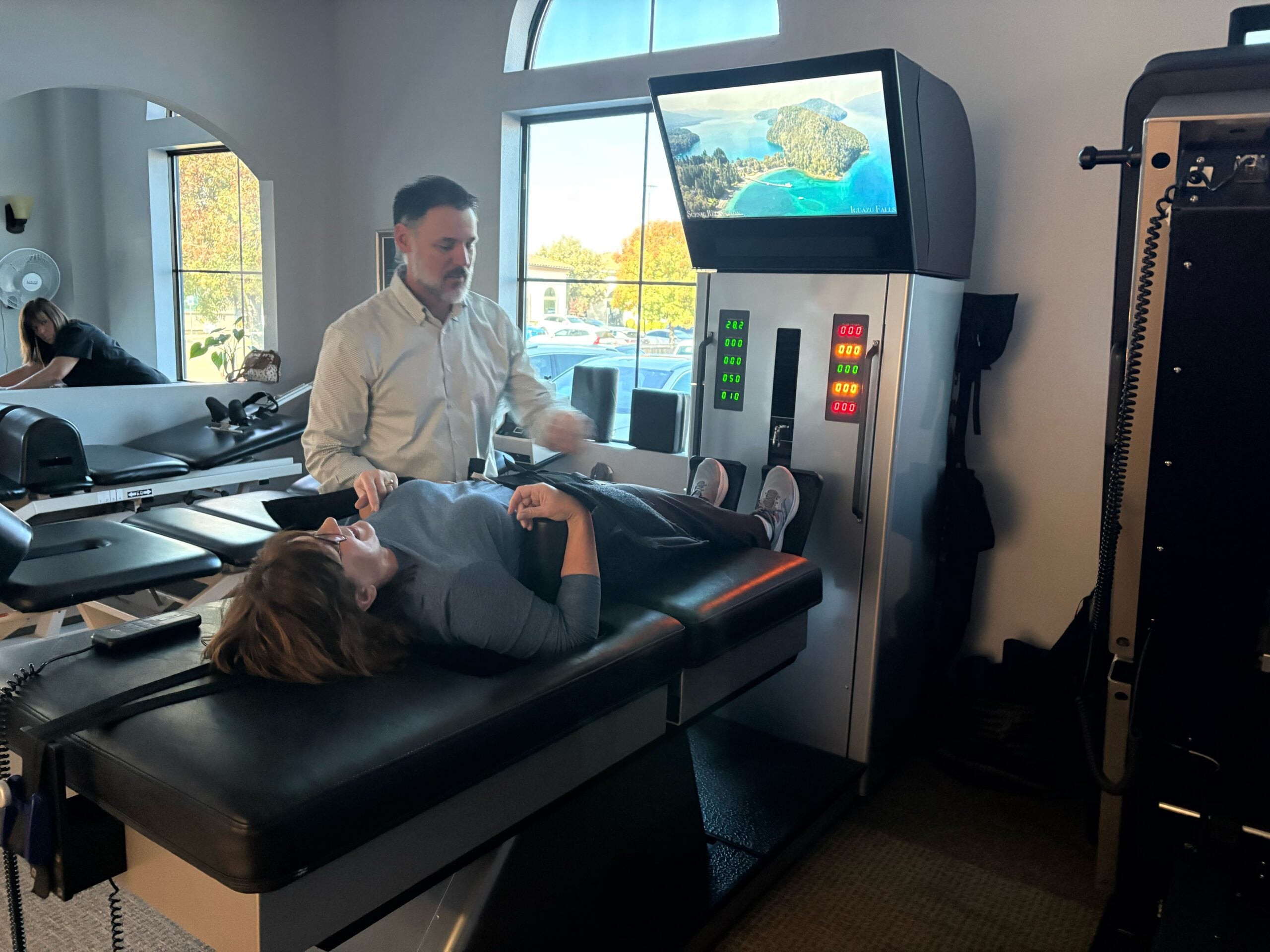
If you’ve searched “DRX9000,” “DRX9000 near me,” “DRX9000 spinal decompression system,” or even “DRX9000 reviews,” you’ve already seen this term.
The DRX9000 is a specific brand and model of non-surgical spinal decompression table. It’s designed to:
Gently position your low back or neck
Apply controlled, computer-guided traction
Adjust pull and release cycles based on your body and settings chosen by the provider
At our clinic in Frisco, we use DRX9000 technology as part of a comprehensive approach for carefully selected patients with:
Lumbar herniated discs
Bulging discs
Degenerative disc disease
Some cases of spinal stenosis and sciatica
Again, it’s not for everyone—but for the right candidates, it may be an important piece of a non-surgical strategy.
It’s very common for people to search “herniated disc surgery,” “minimally invasive discectomy,” “lumbar decompression surgery,” or “back surgery for herniated disc” at the same time they’re searching for “non surgical decompression” or “avoid back surgery.”
Here’s a simplified contrast:
There is severe, progressive weakness
Loss of bowel or bladder control (emergency)
Significant structural compression that hasn’t improved with conservative care
Conservative care has been tried and failed, and your surgeon believes surgery is appropriate
You have a confirmed disc problem (bulging, herniated, degenerative)
You’ve tried basic conservative care and still have pain or sciatic symptoms
You’re hoping to avoid or delay surgery if it’s safe to do so
Your imaging and history fit accepted guidelines for decompression therapy
A good clinic will never promise a “cure” for every herniated disc or claim to replace all surgeries. Instead, we:
Review your history, exam, and imaging
Determine if spinal decompression is reasonable for your specific case
Explain the realistic goals and limits of care
Coordinate with your other doctors when appropriate
Searches like “back specialist near me,” “back doctor Frisco,” “spine specialist Frisco TX,” and even specific competitor names show that people are trying to decide where to go.
Different providers play different roles:
Orthopedic spine surgeons / neurosurgeons → handle injections and surgery when needed
Pain management physicians → focus on medications and injections
Physical therapists → exercise, rehab, movement training
Chiropractors & decompression clinics → hands-on care, spinal decompression, rehab, and non-surgical options
At Frisco Spinal Rehab, our focus is on non-surgical spinal decompression (including DRX9000), chiropractic care, and supportive therapies aimed at:
Reducing pain
Improving function
Helping appropriate patients avoid or delay surgery when possible
We’re not a surgical center—and we’re up-front about that. Many of our patients have already seen other providers or even been told “surgery is your only option” before exploring decompression.
If you’re searching “spinal decompression Frisco,” “DRX9000 near me,” or “non surgical herniated disc treatment,” here’s what typically happens at an initial visit:
Consultation & History
When did the pain start?
Where does it travel? (Back, leg, foot, neck, arm, etc.)
What have you tried already (PT, injections, medications, other chiropractic, etc.)?
Exam
Orthopedic and neurological tests
Range of motion
Strength, reflexes, nerve tension tests
Imaging Review
We review your MRI or X-rays when available
If needed, we may refer for updated imaging or coordinate with your other doctors
Candidacy Discussion
If you’re a candidate for DRX9000 decompression, we explain a proposed care plan
If you’re not a good candidate, we’ll tell you that and discuss other options
Q&A About Treatment
Typical questions we hear (and that people search for):
How many sessions will I need?
What does it feel like?
How long do the results last?
What does it cost?
We’ll walk you through all of that before you decide whether to start.
If you see yourself in any of these searches…
“herniated disc treatment in lower back”
“bulging disc treatment near me”
“spinal decompression near me”
“DRX9000 spinal decompression therapy”
“back specialist Frisco TX”
…then a personal evaluation is the only way to know if DRX9000 decompression makes sense in your case.
It may be an option if:
You have a diagnosed herniated, bulging, or degenerative disc
Pain, numbness, or tingling is affecting your daily life
You’re trying to avoid or delay surgery when it’s safe to do so
You’re willing to follow a structured plan (not just a one-time “quick fix”)
You don’t have to keep bouncing between search results for:
“how to fix a herniated disc,” “best treatment for bulging disc,” “spinal decompression Frisco,” “DRX9000 near me”…
If you’re ready for a conversation tailored to your MRI, your symptoms, and your goals, you can:
Call our office to speak with our team and schedule a consultation at 972-712-7744
Or request an appointment thru email and we’ll follow up with you – dkaff@friscorehab.com
We’ll review your situation, explain whether DRX9000 spinal decompression or other non-surgical options might help, and give you a clear plan—so you’re not left alone with Dr. Google anymore.


