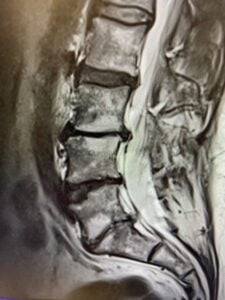
If you’ve been dealing with a herniated disc, sciatica, or nerve pain, you may have come across discussions online about a peptide called BPC-157.
Some people claim it can:
• accelerate healing
• reduce inflammation
• repair injured tissues
• even help nerves recover
Because of these claims, many patients with chronic back pain are wondering:
Could BPC-157 heal a herniated disc?
The answer is more complicated than many headlines suggest.
Let’s look at what we currently know.
BPC-157 stands for Body Protection Compound-157.
It is a peptide derived from a protective protein naturally found in the stomach.
Researchers have studied it for potential roles in:
• tendon healing
• ligament repair
• nerve regeneration
• inflammation control
• blood vessel growth
Most of this research has been performed in animal models, where BPC-157 has shown interesting effects related to tissue repair.
This is why the peptide has gained attention among athletes, regenerative medicine researchers, and patients looking for ways to accelerate healing.
A herniated disc occurs when the soft inner portion of a spinal disc pushes outward and irritates nearby nerves.
This can cause symptoms such as:
• sciatica
• burning nerve pain
• numbness in the arm or leg
• tingling in the hands or feet
• muscle weakness
Because BPC-157 may influence healing pathways and inflammation, some people speculate that it could help injured discs recover.
However, the reality is that disc injuries are more complex than most people realize.
Intervertebral discs are unique structures.
Unlike muscles or skin, discs have very limited blood supply.
This means healing occurs slowly.
Disc injuries also involve mechanical pressure inside the spine, not just inflammation.
When a disc bulges or herniates, it can place pressure on nearby nerves.
That pressure is often what produces symptoms like:
• shooting leg pain
• arm numbness
• burning nerve pain
• weakness
Because of this, treatment approaches often focus on reducing pressure on the disc and nerve.
Early research suggests BPC-157 may influence several biological processes including:
• inflammation signaling
• blood vessel formation
• cellular repair pathways
• nerve regeneration mechanisms
These findings are promising.
However, there is currently no strong clinical evidence showing BPC-157 can repair or reverse a herniated disc in humans.
Most studies remain preclinical or experimental.
Patients should be cautious of exaggerated claims suggesting peptides can fully regenerate spinal discs.
One of the biggest drivers of nerve pain from a disc injury is mechanical compression.
When a disc is under excessive pressure:
• it may bulge outward
• the nerve root becomes irritated
• inflammation develops around the nerve
This combination often produces the symptoms patients feel.
Reducing pressure on the disc can sometimes help create an environment where healing processes can occur more effectively.
Before considering injections or surgery, many patients investigate non-surgical options.
Depending on the specific diagnosis, treatment approaches may include:
• therapeutic exercise
• chiropractic care
• anti-inflammatory strategies
• spinal decompression therapy
• targeted rehabilitation
These approaches aim to reduce irritation of the affected nerve and improve spinal mechanics.
Spinal decompression therapy is designed to reduce pressure within spinal discs.
By gently stretching the spine in a controlled way, decompression therapy may help:
• reduce nerve compression
• improve disc hydration
• decrease mechanical stress on the disc
This is why it is sometimes used for conditions such as:
• herniated discs
• bulging discs
• sciatica
• degenerative disc disease
Treatment recommendations always depend on an individual evaluation and diagnosis.
Back pain accompanied by nerve symptoms should always be evaluated by a healthcare professional.
Signs that warrant evaluation include:
• pain radiating down the arm or leg
• persistent numbness
• muscle weakness
• worsening symptoms over time
Imaging and a physical examination help determine the underlying cause of the problem.
BPC-157 is an interesting peptide being studied for tissue healing and inflammation.
Early research suggests it may influence certain biological repair pathways.
However, there is no strong clinical evidence showing it can heal a herniated disc in humans.
For patients dealing with disc-related nerve pain, identifying and addressing the mechanical cause of the problem is often the most important step toward recovery.
There is currently no strong clinical evidence showing BPC-157 can repair a herniated disc in humans.
Some early research suggests BPC-157 may influence nerve regeneration pathways, but more clinical research is needed.
BPC-157 is not FDA-approved for treating back pain or spinal conditions.
Treatment options may include physical therapy, chiropractic care, and spinal decompression depending on the diagnosis.


Donde estan ubicados
Frisco TX.